This Venus retrograde (Oct 3 - Nov 13) has been very revealing… not surprisingly! Anyone who follows Astrology knew this was coming. Whenever our relationships and finances are under review, we pay attention! Yet, even if we knew these themes were bound to come up, we can’t not live through the experience. And yet—through the difficulty, there’s potential for immense growth.
I think the beauty of Scorpio season that’s so often lost on our modern, fast-paced, instantaneous-results culture is that we have to be willing to go into the dark for actual transformation to occur. We can’t just skip onto the next thing or keep pushing through, not feeling the sticky stuff. (Well, you can try, but you’re only likely to repeat the same patterns and end up right back where you started, until you actually turn toward yourself). As they say: The only way through is through. No mud, no lotus.
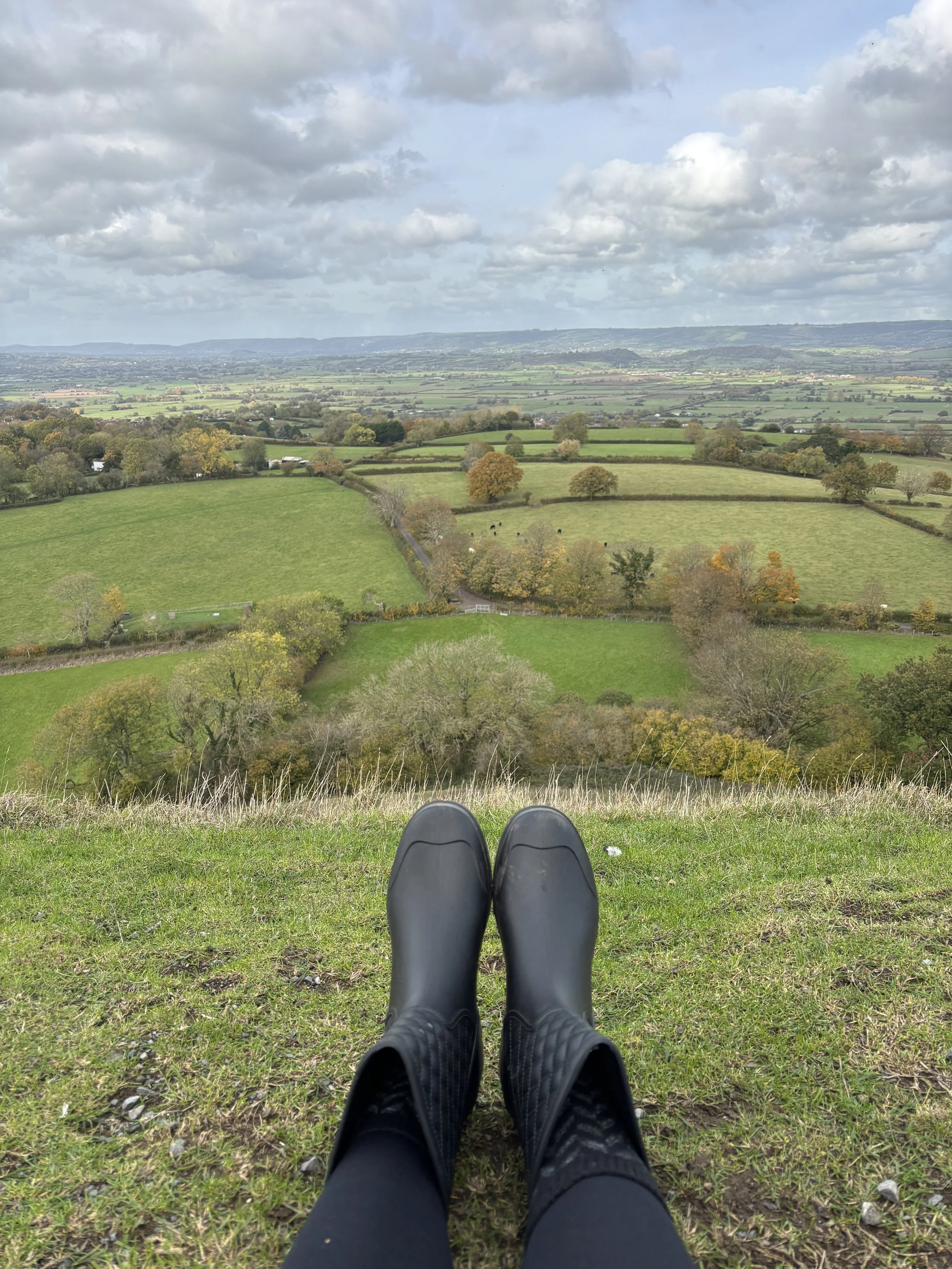
Throughout this retrograde, I’ve been on quite the journey. Internally and literally—traveling across the Atlantic on retreat for a chunk of it. I’ve moved through what has felt like the full spectrum of emotions—feeling moments of immense self-doubt, grief, anger, as well as hope, inspiration and liberation. And in coming toe-to-toe with some of my own edges, I can feel that I’m on the brink of living into a more expansive version of myself… this is what it means to go into the dark and emerge anew on the other side. 🐦🔥
There’s a sacredness in honoring each season, before crossing a threshold and moving into the next. In reflecting on that which has transpired, we can truly integrate its wisdom, and fully step into the new. So as we prepare for Venus to station direct in two days time (and on this potent portal day of 11/11), I want to share some of the core themes that have come through in my own process, in hopes that they resonate with you & can be of use in your own life.
1) Triggers carry crucial information (and are often the key to your liberation).
Let’s get right into it, starting with a big one. This Venus retrograde was particularly triggering for many of us. And that’s never easy, especially when it’s in regards to relationships we hold dear and values close to our hearts. But triggers are also guiding lights—a compass, if you will—clarifying what matters to us and often cuing us to meet a part of our internal experience in a deeper way. When we’re triggered, I think of it as part of us that needs our attention. And if we can turn toward ourselves with genuine curiosity and care, that can be very illuminating, cathartic and even fuel our evolution.
I also want to take a moment to acknowledge the spectrum of “triggers” and that our approach, depending on the intensity of said trigger, is going to vary. Culturally, I think we’re at a point where we loosely define “triggers” and often people say they’re “triggered” when they’re simply uncomfortable with something, don’t like what they’ve heard, or feel rejected. They assign the word “trigger” to a stimulus eliciting an emotional response that’s actually completely proportionate to the situation at hand. In our adversity to feelings, we’ve developed an intolerance for discomfort, when having emotions is part of being alive! And while I think this is also worth further investigation, the triggers I’m referring to are responses that are often disproportionate to the situation at hand.
It can feel like an extreme reaction, shocking even, when something in your body is telling you: “Hey, that—right there—that is really not okay with me.” It feels like a hard stop, something you cannot problem solve through. This level of response is normally an indication that something more from our history is being brushed against (or we’ve hit on shame that runs deeper). Before anything, you’ll need to regulate—hugging someone, shaking it out, crying, screaming—whatever you need to do, and then you have the opportunity to listen to yourself more closely. And this is often the part we miss out on: actually asking what was being poked on and if we’re ready to move through that experience now. Because while, yes, we may need to set a boundary in the present or remove ourselves from a situation, there comes a point where we can boundary ourselves off from life, lessening our access to the world (and connections) more and more.
Now, this is nuanced and tender work that may require support from a trusted guide or professional, but it could be that enough time has passed between the actual event (what’s fueling the trigger) and where you are in your life now, that your system can metabolize the experience, effectively releasing the trigger altogether. This is not to disregard your lived experiences, nor does it mean you’ll never react in the future to similar events, but working through triggers in the body can mean no longer being charged with the same intensity or frequency. And that can be incredibly freeing.
2) Having an intellectual understanding of something is not the same as embodied wisdom.
The “in the body” piece brings me to my next lesson: holding an idea of something in our heads is not the same as putting that into practice. Identifying a pattern, talking through a situation, gathering more and more information… will only get you so far. Our culture has taught us to primarily operate from our heads, to “think things through” and “be reasonable.” But understanding something in our minds does not mean our bodies get it. Doing more and more research does not equate to a lived experience. Accruing more and more trainings and credentials is not the same as sitting face to face with someone. I could give you a manual on how to ride a bike and talk you through it for 4 hours, but you aren’t going to actually know what that’s like until you get on the freaking bike.
Very often, we find ourselves waiting to feel ready. That if we just get the right bit of insight, that it will all click into place and the change will naturally occur. And shockingly, we never do it or change! It comes to a point where we just have to try it! “Fuck around and find out,” as they say. Taking action will give you a lot of information & you can adjust from there. If you stay in the world of ideas and concepts, you’ll never actually live. And spoiler alert: just talking about our problems is rarely enough to shift them.
Moving toward the thing that feels intimidating is how we learn that we can actually do it. This is embodied wisdom: an inner knowing, a self-confidence, a muscle memory of sorts, that only comes from living through something. And that is wisdom we carry with us—whatever comes our way.
3) Healthy assertion of anger and desire = life force. Reclaiming these forms of expression is vital for women, especially.
A sure way to get out of your head and into your body is to reconnect with your instinctual self. To tap into your felt experience (and the importance of somatic work). We’ve severed ourselves from Nature in so many ways, and it’s cost us dearly. We’ve learned to be “civilized,” “domesticated,” and “proper.” And we deny ourselves much of what it means to be a living, breathing human in the process!
We came into this world feeling and expressing it all. Think about how free children are: they tell you how they feel. They make silly noises. Jump around and dance. They just are. And while we do need to learn what’s appropriate in certain situations and having some filters is part of being considerate, there are some ways of containing ourselves we would also benefit from unlearning. Getting some of that wildness back goes a long way. Having access to the full spectrum of emotion & expression—and learning how to be present with that range—is vital.
For women, specifically, we often learn that to be “feminine” is to be soft, pretty, nice and gentle. Pursuing our personal desires might be seen as selfish. Wanting sex makes us sl*ts. Expressing our anger makes us b*tches. And this conditioning runs very deep—back to a significant fracture in the psyche, commonly referred to as the Madonna/Whore split—where a woman is either good, matronly, motherly, beautiful, domesticated and caring (all love and light), OR she’s a whore, chaotic, demanding, ugly, dirty (dark and sinful). I could spend a lot more time on this wounding, but the short of it is: there’s a reason they don’t want us to reclaim what “the dark” represents. Staying constricted to the Madonna archetype strips away our life force.
A woman who is in her own body, aware of what she likes and wants, and is not afraid to stand up for herself, is very difficult to control. She’s awake and alive! This threatens the systems of oppression—threatens the foundations of what our patriarchal culture is built on.
Anger is how we set boundaries. Pleasure directs us toward that which fills us up, and nourishes us. We need both to be in a state of wholeness. When we learn to shut down our primal needs, when we bypass or avoid our anger, we often succumb to a numbed, detached, deflated existence. And if the full range of emotions is not considered socially acceptable, we also never learn how to actually process and express in healthy ways (so of course it comes out sideways).
A final note: When we only know anger within the context of abuse or an internalized belief that anger is only hurtful and destructive, our relationship with anger can get quite complicated. We can feel like healthy assertiveness is scary confrontation. We often need additional support with learning how to slowly introduce this type of activation back into the system, in a way that’s not overwhelming.
4) At the end of the day, you can’t make anyone understand you (and they’re entitled to their own perspective).
We all have our own lived experiences, conditioning, lens of how we view the world, walking our own paths, in our own ways. We all have our own triggers we may or may not be working through. Often we think that if we just find the right words or present something in a certain way, then the other person will understand. Surely if we explain further, something will click.
Women especially are praised for being accommodating and empathetic—putting ourselves in another’s shoes is a skill we’ve fine-tuned. But that doesn’t mean everyone can (or is willing to), depending on the situation. Sometimes, when we force our perspective on someone else, they only dig their heels in further (and you’re only spending more of your precious time and energy, trying to convince them otherwise).
Any kind of reciprocal relationship takes two: each person coming with a certain amount of openness, prioritizing curiosity and care, and a willingness to look at oneself. You can only control one half of that equation. If you’ve genuinely met someone with vulnerability and they can’t meet you there, you’ve done what you can. And they likely have their own reasons for not meeting you there, which, again, is for them to sort out (or not!). Sometimes all we can do is plant seeds and limit our exposure to those people that are determined to misunderstand us.
5) Self-trust is paramount. Being the authority of your own life is everything.
One of the reasons we often continue to seek understanding from someone else is that we doubt ourselves. In other words: needing to prove yourself, your position, your worth even, typically stems from an underlying insecurity of sorts. And we’ve all felt this at some point: the pressure to prove we’re enough, to perform, to achieve, to be seen and accepted by those around us. Caring about what other people think of us is part of being human! Connection = safety. Where things can go wrong is when we lose ourselves in the process. Where we sacrifice our individuality and what feels best for ourselves, for the sake of perceived security.
Moreover, as a culture, we’ve also been taught to consult the experts, to follow the path that’s been laid out for us. We’re constantly being bombarded with advice and information about how we “should” be living our lives. It’s no wonder we haven’t learned how to listen to ourselves. We aren’t taught to listen to our intuition and what feels good to us. We learn to outsource our power and agency over our lives in the process (take my free quiz now to see where you outsource your power, as a way back to reclaiming it!). Before we know it… we wake up one day wondering who orchestrated it all. Living inside a life that doesn’t even feel like ours. This could register as feeling depleted, disconnected, unfulfilled.
Finding our way to a life that does feel fulfilling, surrounded by those that do get us, starts with turning towards ourselves. Learning to build that self-trust and internal sense of safety is a process that changes everything, and that’s the process I take women through in my private coaching sessions: it’s change that sticks because it’s transformation from within.
By the way, being the authority of your own life is not the same as claiming to know it all, nor does it look like closing yourself off to external input. This reaction, too, stems from insecurity! When we’re self-assured, coming from a place of felt safety, uncertainty and other viewpoints don’t feel so threatening.
6) Allowing yourself to be seen by those you trust can be one of the most healing things (and you can’t cultivate genuine connection without vulnerability).
Bringing me to my final point: you can do all of the healing possible on your own (and this is often a very important step), but eventually, to put that into practice, you have to allow yourself to be seen by other people. Again, as creatures wired for connection, much of our wounding happens in relationship. This means that healing also, ultimately, needs to happen in relating to another person. As a trained therapist, I often explain to clients that our individual sessions are the “pilot” of the experiment. We get to try things out in a more contained way, to build safety, to practice what a new way of relating could be like. Putting that into practice within the relationships in our lives is the next step. Again, we can talk about boundaries all day, but what good is it if you can’t actually implement them? After being hurt in the past, we need to allow ourselves the opportunity to learn that the outcome could be different with someone else. And if we want genuine connection, we have to be willing to be vulnerable. Otherwise, that relationship is always going to be conditional on us only showing up as a muted version of ourselves.
The caveat here is to be discerning about who has access to your vulnerability (especially whilst newly practicing). Which people and spaces will be able to meet you in this new way of relating? If you learned a certain pattern within your family, for example, they might not react well to a different way of communicating, because this threatens the familiar system. This is why finding nonjudgmental spaces (even better—women’s spaces!), can be so healing.
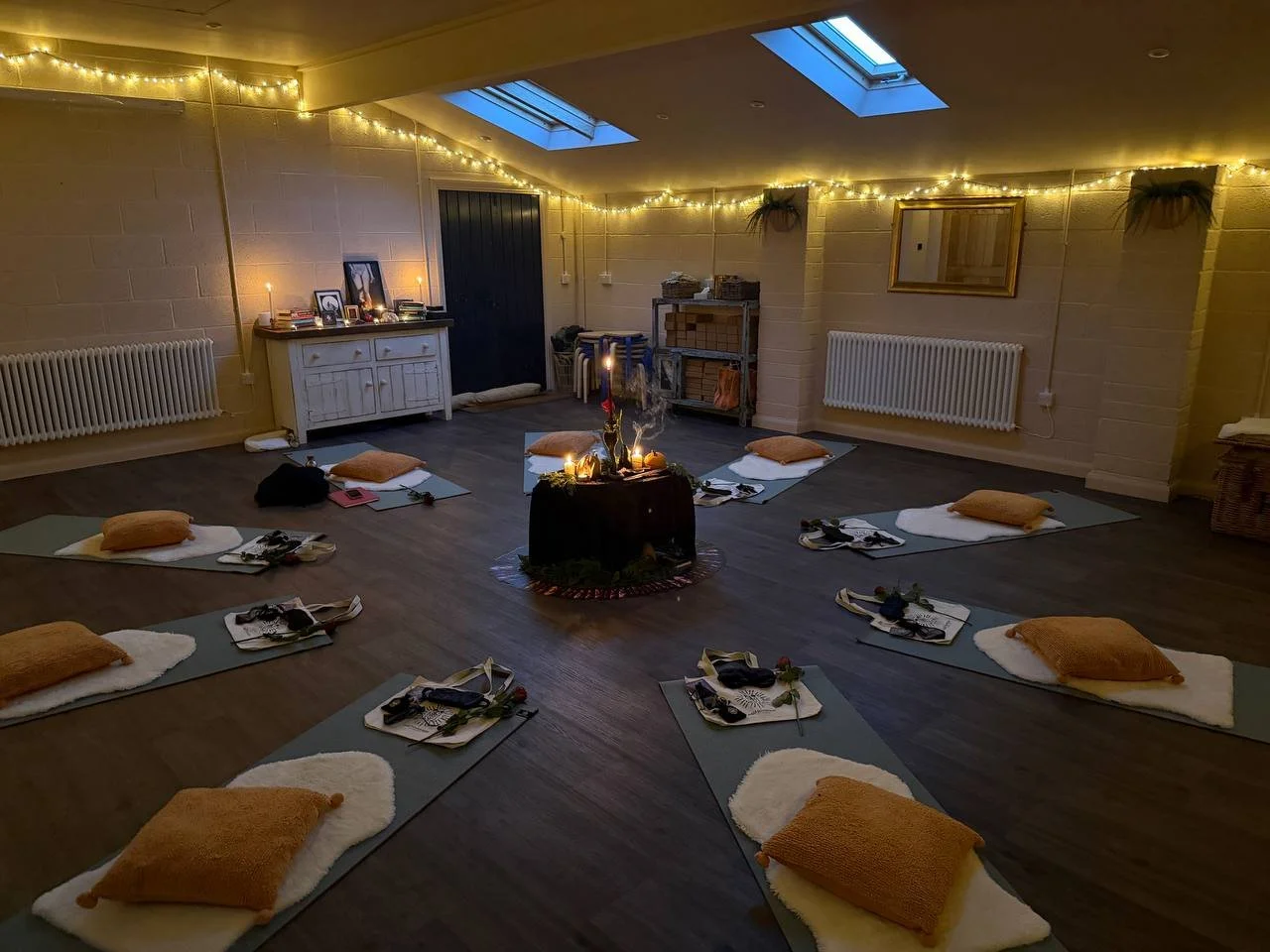
As women, we’re so used to being in competition with each other, and many of us have a sister wound. This is a wound I personally received a lot of healing around on my retreat this retrograde, and it’s part of what prompted me to start hosting women’s circles in the first place!
We were never meant to do this alone. We all crave connection with those that understand us. Being human—in a female body, no less—is hard enough; let’s support each other! We’re really all quite similar, with very similar struggles. Take care out there 🖤
—Sam
P.S. Want to continue the conversation? I offer free, 30-minute connection calls and would love to hear how this is landing for you!
